Showing posts with label medical transcription. Show all posts

March 3, 2016

Your Strongest Friendship May Be a Long Distance One

1. Time together is so special.

We see one another so rarely that any time together is a gift. There is no room for small spats or any kind of conflict because every minute that goes by is another minute till we have to say goodbye again. Every second counts. We are so cautious never to waste time on anything but loving, supporting and listening to one another.

2. We’re really comfortable with the fact that we have other friends.

I have had friends in the past who need constant reassurance that I like them best of all. I have been that friend a lot, too, in some of my friendships, but never with any of my faraway friends. When you’re in a long-distance friendship, you can’t expect that from somebody. Of course we have other friends. Thank god you have other friends. There’s no need to constantly confirm our definitive friend ranking because we know that long-distance friends are on a different list altogether.

3. There is a bigger freedom for growth.

When I met my best friend, we both had braces and bad taste in music.

For More and Original Article.

Ready to take a Medical Terminology Class?

February 2, 2016

How to Take Criticism Despite the Delivery

Your critics aren’t always going to be the nicest people to interact with. To take the criticism effectively without the emotional hit to the self-esteem, ignore how it’s delivered.
When a critic gives you their opinion, the first natural reaction is to respond emotionally. It doesn’t feel great when someone tells you all your flaws. However, as business blog Inc. points out, putting your feelings aside to focus on how you can improve will be more beneficial to you:
But the truth is, criticism is often rooted in truth—even when it’s not delivered in an ideal manner. When you receive negative feedback, you have two choices: You can put your feelings aside and try to learn from the situation, or you can get angry and let emotion get the best of you. One method is proactive, the other is reactive.
Guess which one will benefit you in the long run?
For More and Original Blog.

Learn how you can become a Medical Transcriptionist.

December 8, 2015

This Morning Routine Will Change Your Life

It only takes seven minutes to change how you approach your day. Using the routine described below when you get to work will make a world of difference in your productivity, your attitude, your success, and your health. It's like the approach you make to the tee on a golf course. You plan out how you will hit the shot, which is more important than the actual swing. Before you start your day, this routine will provide the right mindset. Will you follow it?

Note: I'm going to call this routine "The Seven," as in, "Did you do your Seven this morning?" (I've even applied the seven-minute rule to business presentations.) Feel free to borrow that term or send me ideas on a better name.

It only takes seven minutes to change how you approach your day. Using the routine described below when you get to work will make a world of difference in your productivity, your attitude, your success, and your health. It's like the approach you make to the tee on a golf course. You plan out how you will hit the shot, which is more important than the actual swing. Before you start your day, this routine will provide the right mindset. Will you follow it?

For More: http://www.inc.com/john-brandon/this-7-minute-morning-routine-will-change-your-work-life.html?cid=cp01002mentalfloss

Learn how to become a medical transcriptionist: www.wecareonlineclasses.com

November 24, 2015

Personality Types that Make the Most Money

We'd like to think the American Dream holds room for everyone to make big bucks, regardless of innate qualities like personality.

But some new data from Truity Psychometrics suggests the contrary: Your Myers-Briggs personality type correlates with how much money you earn.

Specifically, traits of extroversion, sensing, thinking, and judging all predict higher incomes. And the difference is remarkable: Introverted, sensing, and perceiving individuals (ISPs) make an average of $32,000/year, while those with an extroverted, sensing, thinking, judging (ESTJ) personality type come out on top with a whopping $77,000/year.
For More and Original Article.

Sign up for a Medical Transcription Course at WeCareOnline.

November 10, 2015

11 Subtle Signs of Diabetes that are Easy to Miss

Because diabetes can develop gradually, it’s important to recognize any early warnings signs and take preventative measures as soon as possible. If you find that these symptoms fit you, consult your doctor.

1. Changing Vision

Sudden fluctuations in vision should be taken very seriously—even if that change is for the better. While it may be exciting to suddenly find yourself less reliant on your glasses, vision that seems to improve or worsen out of nowhere is a potential sign of diabetes.

2. Excessive Trips to the Bathroom

If you find yourself making what seems like an endless amount of bathroom breaks over the course of the day, it may be more than just a mild inconvenience. Diabetes sufferers use the bathroom far more frequently than most, sometimes urinating as much as 20 times per day—and always with a full bladder.

3. Snoring

Snoring occurs for a variety of reasons, many of which don’t point to a serious health complication. However, if your snoring has progressively worsened to the point where it wakes you or others up, diabetes may be a factor.
 
Learn about upcoming medical transcriptionist classes at www.wecareonlineclasses.com

October 15, 2015

Get Ready For Fall with the Healthiest Foods in Season

Get ready for the autumn harvest everyone. Listed below are some delicious, mouth-watering superfoods that the mouth will crave long before that first bite. Foods such as apples, cranberries and carrots are not just delicious to eat but healthy too. Squash, sweet potatoes and beets serve as a way to cleanse the blood and purify the body; not to mention, they can be pretty tasty too.


SQUASH OR PUMPKIN ANYONE?

Squash contains complex carbohydrates and works great in a salad or as an addition to a sandwich. It's a great source for fiber and beta carotene. Pumpkin has some great attributes too. Pumpkin is one good source of carbohydrates that work to regulate blood sugar. The pumpkin seeds are an excellent source of zinc and protein. Interested in a special tip? Well, cut up the pumpkin into small pieces and add in some salt and olive oil. Once that is done, bake at 350° F until the pumpkin is slightly brown. If you are interested, there is a blog post coming out soon entitled "14 Ways to Enjoy Pumpkin."


DO YOU LIKE SWEET POTATOES?

They are high in vitamins C and B6 and beta carotene. Having vitamin A in the body will help to maintain the health of the skin, hair and the immune system.
Fall is a great time to go back to school. Have you been thinking about becoming a medical transcriptionist?

August 27, 2015

8 Small Things You Do That Others Use to Judge Your Personality

From the moment two people meet, they're sizing each other up, looking for signs of qualities like honesty, intelligence, and altruism.

Whether it's a date or a job interview, the small stuff matters — from the firmness of your handshake to how often you check your phone.

We checked out the Quora thread, "What are the really small things that tell a lot about a person's psychology and personality?," and highlighted some of the most common behaviors people use to judge you.

1. Your handshake

Several Quora users admitted they judge people based on their handshake.
"Strong handshakes usually reflect a strong and confident character, whereas weak handshakes usually indicate a lack of confidence and are almost always a characteristic of people who would look for an easy way to do things," writes Julian Parge.

Research backs up the idea that your handshake can reveal certain aspects of your personality: One study found that people with firm handshakes were more likely to be extroverted and emotionally expressive and less likely to be shy and neurotic.

2. Whether you show up on time

Late for a very important date?
 
Learn more about becoming a Medical Transcriptionist

April 9, 2015

Chores May be Key to Raising Successful Kids

The key to raising successful children could be making sure they help out around the house, according to a new article by the Wall Street Journal.

A recent survey found that 82 percent of parents did chores growing up, but only 28 percent require their kids to help out around the house.

One reason for the shift may be an emphasis on extracurricular activities, which may have caused making the bed to fall by the way side.

But chores may still be one of the most important predictors of future success, teaching self-reliance and responsibility, as well as empathy, according to the report.

The Wall Street Journal article suggests parents wanting to give their children certain tasks can make a game of it, propose small allowances and make sure to thank their children for helping them.

For More and Original Article
LEARN MORE about WeCareOnline's Medical Transcription Scribe Program.

February 17, 2015

Take Control: Stop Playing the Victim with Time Management

When it comes to managing your time, many people feel like they have a crushing number of requests coming at them that make them a victim to their circumstances. "There's always too much to do. Everyone just keeps piling more work on me." Sound familiar? If so, you're not alone, but you should stop playing the victim and own the situation.

This post originally appeared on the Harvard Business Review.

They see forces outside themselves as the reason that they don't have time to exercise, can't leave work at a reasonable time, or just generally struggle to get everything done. Although there are occasionally situations that are outside of your control—that recent bout with the flu, for example—most aren't. And even though it can feel gratifying in the short term to blame others for your situation, this attitude toward your time investment will leave you truly powerless in the long run.

When you play the victim with your time, everything around you suffers.


For More and original blog.
Learn More about what it takes to become a medical transcriptionist.

September 23, 2014

Too Busy to Clean Your House? Read More for some great easy tips.

Mothers these days have a lot on our plates. Between work, school, family matters and keeping the house clean, it’s a wonder more women don’t go stark raving mad. It seems that there is an endless request list of things to do, and not enough hours in the day to do them.
  However, we are here to help. Don’t get overwhelmed and frustrated. Instead, carve out a few minutes from your very busy day to read this guide. We’ve got everything you need to know in this busy mom’s guide to house cleaning.

1. Clean as You Go.
Don’t let the mess build up, clean up a little at a time. While you’re cooking dinner, load the dishes you use into the dish washer right after you use them. If you notice toys, school books or articles of clothing laying on the ground, pick them up right away.

2. Teach the Kids.
It takes a lot of work to keep a house clean – don’t feel as though you must do it all yourself.


Learn more about our new medical transcriptionist class at: http://wecareonlineclasses.com/

August 28, 2014

Question about WCO's NEW Medical Transcription Class?

Here's a recent question we received from a potential student: I have read a little bit about scribing but do not fully understand how it is implemented on the job or how it fits in with medical transcription, please explain.  Is one person responsible for both?

Answer from Ms. Balderrama-Martinez, MT instructor:
I am sure there is a lot of misinformation out there, so I will try to clarify. When performing medical transcription, the transcriptionist is typically sitting at a computer either in a clinic or hospital setting and there is no patient interaction.  You are transcribing medical reports and they vary based on specialty.  Radiology reports like x-rays, CT scans, MRIs, ultrasound reports - these are typically transcribed on-site as the reports are needed immediately, or at least within 24 hours.  The same for a hospital setting, a history and physical report or an operative report is needed ASAP.  When you are working as a "medical scribe" you are performing the same duties as a medical transcriptionist; however, you are in the Emergency Room, or in the patient room with the physician or medical provider (nurse practitioner or physician assistant).

I have worked in orthopedic surgery clinics training scribes and working with the orthopedic surgeons to help fine tune a medical scribe program as the surgeons strived to provide one on one care to their patients, and still maintain their patient medical records utilizing EMR (electronic medical record) software.  When the physician or medical provider is documenting the patient information themselves they are interacting with the laptop, not the patient.  I can assure you, the patients were not happy with that arrangement.  By utilizing medical scribes, the physician is able to dictate to the scribe as he is performing the physical exam on the patient, he is able to dictate his review of the x-ray findings as he is viewing them, etc.  When done well, utilizing a medical scribe is the definition of economy in motion.  The physician/provider is able to maintain excellent electronic medical records, the patient receives better than adequate medical care as their record is created in their presence, and though there are times when the progress note has to be amended to add additional information following the office visit, it is a great asset to have a trained medical scribe on staff.
 
I have had many physicians approach me and ask me how to institute this type of program in their office so they don't have to spend nights and weekends getting caught up on their dictation.  Emergency Rooms across the country have been using scribes for some time now.  I believe as the requirements for Meaningful Use and electronic medical records become stricter, there will be more and more medical scribes along with medical transcriptionists working in clinics and hospitals.

To answer your question, yes one person can do both.  There are letters which are typically sent from one physician to another with patient information shared, and so there are times when a scribe is transcribing from dictation as well.  This is completely dependent upon when and where you are working.

For More about this new class at WeCareOnline.
Register Now!
Email Ms. Balderrama-Martinez

August 1, 2014

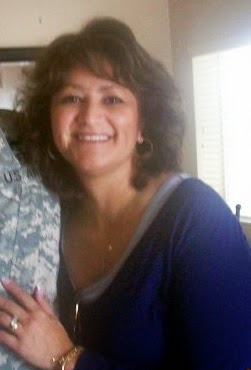
We Care Online Staff Highlight - Irene Balderrama-Martinez

This month we get to meet Irene.  

Irene Balderrama-Martinez has worked in the healthcare industry for 30 years. She is a die-hard University of Arizona fan and alumni, along with many family members, who have embraced the health sciences in various careers.  She has worked for Carondelet St. Joseph’s Hospital and Carondelet St. Mary’s Hospital, as well as University Medical Center and the College of Medicine in various departments including Neurology, Physical Medicine and Rehabilitation, Gastroenterology & Hepatology, Orthopaedic Surgery and more recently as an administrator in Family Practice and Urgent Care Clinic.

Irene is instructor for our new program, Medical Transcription - Scribe course.  After many years of training Medical Transcriptionists/Scribes in outpatient clinical settings, as well as in the acute care setting, Irene looks forward to teaching We Care Online students with the goal of healthcare documentation integrity as we strive to support healthcare providers in the evolving use of EMR software and the Federal Meaningful Use guidelines.  

When not reading avidly, she enjoys free time with her family. For questions about the courses she teaches email: irene@wecareonlineclasses.com