June 16, 2015

Seniors: When is the Right Time to Stop Driving?

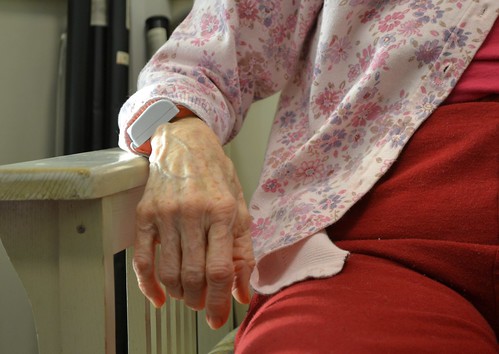
For many of us, driving is a vital component of freedom and independence. But aging brings physical changes that can jeopardize your future on the road.

“Most people I see don’t think they have any driving problems,” says Barbara Moscowitz, a geriatric social worker at Harvard-affiliated Massachusetts General Hospital, Boston. “But even subtle changes in your health can affect your reaction time. You need to address them while you’re well, so you can keep driving.”

SENSORY CHANGES

Changes in eyesight may make it harder to see at night, read traffic signs, and cope with glare. The American Academy of Ophthalmology recommends that people ages 65 and older have comprehensive eye exams at least every other year.
Hearing loss also can affect your driving skills by keeping you from noting outside noise such as sirens and horns. The American Speech-Language-Hearing Association recommends getting hearing checks every three years after age 50.
Quick fixes: Keep noise in the car to a minimum, and cut back on night driving.

For More and Original Article.
Learn how you can help seniors by becoming a home health aide.

June 11, 2015

Nurse Assistants: Unsung Heroes in the Healthcare Industry

Always on the first day of National Nursing Assistants Week, it is National Career Nurse Assistants Day. This day is set aside to recognize the nursing assistants who dedicate their lives to the well-being of others for 5 to as many as 58 years.

Nursing assistants many times work in hospitals and nursing homes performing everyday living tasks for the elderly, chronically ill or rehabilitation patients who cannot care for themselves.  A more in-depth training and qualification that covers a wider scope of responsibility is indicated by government certification.  The state distributes these certification exams and the classes to study for them are offered by the American Red Cross as well as other providers.
On this day, we want to THANK these people for the wonderful job that they do and the very special care that they give to those in need. 

NATIONAL CAREER NURSE ASSISTANTS DAY HISTORY
National Career Nurse Assistants Day, an “unofficial” National holiday, is sponsored by the National Network of Career Nursing Assistants.

For More and Original Article.
Learn how you can become a Certified Nurse Assistant.

June 10, 2015

Tuition Reimbursement Winner for May

Congratulations, Hannah! 

Hannah is our Tuition Reimbursement Winner for May! 

She will be getting a refund from us soon. You could be next!

"My name is Hannah. I have three sisters one being my twin sister. I am a prenursing student at Wichita state and am applying for the nursing program for the spring semester. I am so appreciative for this reimbursement!! I just moved into a house and this will help for this years tuition!"

- Hannah S.

Students registered for a Nurse Aide course will automatically be placed in a monthly drawing to win reimbursement of their course tuition. The monthly drawings will choose one student to win a reimbursement
.

If you want to know how to get in on this Click Here for more information.

Remember, before you can win, you have to register and pay for a Nurse Aide course - See our course catalog Click Here.

Or go to our website Click Here.

June 9, 2015

Celebrate Nursing Assistant Week, June 11-18, 2015

Now as never before, attention is being directed to care of our elder and disabled citizens and greater attention also is directed to the workers who provide hands-on-care and caring.
The 38th annual National Nursing Assistants’ Week provides a timely opportunity to foster and showcase the wonderful things that can happen for residents and workers when we join together in planning your special Week, “Nursing Assistants @ the Heart of Care.”

Fun projects can also be educational. NA Week Projects for 2015 include Recognition events, Mayor Proclamations, memos to families and news releases; and also includes Person Centered  Care Programs such as “Partnerships: Meeting the Future with Skill and Confidence;”   We also continue the focus on Safe Lifting and decreasing worker injuries.
In order to make a difference, we need to seek out and involve our role models, peers, supervisors, clients, families, community, legislators, public policy officials, media and others.

For More and Original Article.

Learn how you can start your career as a Nurse Assistant today.

June 4, 2015

6 Creative Activities That Will Make Senior Residents Smile


The best assisted living communities make it a priority to have an energetic and creative activities director on their staff.  This individual is tasked with keeping residents busy and happy and stimulated. A good activities director will continually ask residents and their loved ones for input so that the calendar is filled with a well-rounded range of assisted living activities designed to engage residents of all different abilities and interests and to reflect their own interests as community members. Assisted living activities are important for more than just fun and games, though. One study of more than 5,500 participants aged 65 years or older concluded that stimulating leisure activities were significantly associated with a reduced risk of dementia.

Putting a smile on resident’s faces is not too hard with a fun mix of activities. They don’t have to be expensive or complicated. Here are five ideas for creative assisted living activities.

1.      Barbeque  Throw a southern barbeque party. Tell the women and men to dress in vacation resort clothes. Fire up the Bubba barbeque pit and serve your best barbeque ribs, pork shoulders and whole hog.

2.      Concert under the stars Beautiful summer weather brings the ability to invite residents outside to a common area and put on a live music concert. Hire a duo that plays music most residents will recognize and enjoy. Serve snacks, cookies, punch and wine –if allowed in the assisted living residence – and let the music flow and the dancing go.


For More and Original Article at www.ssmgrp.com

Like to learn more about what it takes to become an Activity Director?

June 2, 2015

WeCareOnline June Staff Highlight - Cindy Gaschler

This month we get to meet Cindy Gaschler.  

Cindy has worked in the healthcare field for 15 years. She began her career as a CNA, then completed her LPN, and continued with an ADN degree.  She functioned as a Long Term Care charge nurse, Inpatient Rehabilitation nurse, MDS Coordinator, and Director of Nursing.  

Following this she re-enrolled in college to obtain a BSN while performing duties of Human Resources, Staff Development Coordinator, Risk Management, Health Information Management, and Senior Living Manager. She is a certified clinical instructor for the state of Kansas for Certfied Nurse Aide,Certified Med Aide, Activity Director and Social Service Designee. 


She is married with 3 children and lives in a rural area 10 miles from the nearest town. Cindy enjoys the outdoors. She has horses, dogs, too many cats, and an enormous garden that always wants attention.


With her years of experience in the heath care field, Cindy believes that it is best to focus on the person. Before you help the person, take the time to enjoy him or her without distraction.

Cindy feels blessed to have the ability to work with students both online teaching the Activity Director and Social Service Designee courses and face to face during their clinical experience in Kansas. She also enjoys networking with more northern states online and by phone.  She assists with enrollments, invoicing, and basic technical issues.  She also works with marketing and directs new users in the services available through WeCareOnline.


The biggest change she has seen in the health care industry has been the shift from direct care to documentation. This also correlates with the shift to electronic documentation over paper charting.

On Cindy's desk, the one item that would be noticed without fail is her pencil sharpener. Her children felt an office is not complete without an electric pencil sharpener with the widest variety of color, foil, and decorated pencils ever noted from any party store!  (She never gets to use it because they do not allow her the opportunity to experience a dull pencil.  They are dutifully sharpened by one or all of them daily whether needed or not.)


May 28, 2015

Storytelling Therapy: Between the Lines

From a young age, I was drawn to the power of stories. Between my obsession with the original Nancy Drew mysteries and my love for competing in storytelling contests, stories played a major role in my development.

Of course, stories aren’t just for kids. Storytelling can be engaging and even therapeutic for anyone, with significant benefits for seniors – particularly when the tales are personal.

The Power of Storytelling

“We know from research that narrating life stories can help older people resolve internal conflicts, overcome self-criticism, and improve their sense of self-worth,” says Dr. Karl Pillemer, Cornell University gerontologist and author of 30 Lessons for Loving: Advice from the Wisest Americans on Love, Relationships, and Marriage. “Particularly valuable are storytelling opportunities that allow for ‘integrative reminiscence,’ in which people tell stories about their lives that involve examining and coming to terms with issues in their past.”

Pillemer is referring to his work on The Legacy Project, in which seniors are invited to share their stories as well as their advice for younger people.

For More and Original Article.
Learn what it takes to become a restorative aide.

May 26, 2015

Exercise Together: 100 Great Family Fitness Ideas

What’s one of the biggest obstacles to bringing family fitness into your family life? Ideas.

Just like our kids, we inevitably get hit with that question, “What should we do?”

The first secret to making family fitness work, is to grab little moments and sneak activity in.

The second secret is to streamline things so you can quickly move from planning to doing.

To apply both of these secrets, the last thing you want to be spending time doing is trying to come up with an inspiration for activity.

So to make that question, “What should we do?” disappear like dust in the wind, I pulled my husband and kids together to brainstorm a list of fun activities for family fitness.

Initially I was just thinking let’s try to get to 100. But then I realized this could get much better and bigger . . .

I’d love for you to add your ideas and favorite activities here. Just put them in the comments. Let’s see how far we can go!

(By the way, I realized I cheated a bit here.  I didn’t notice it the first time I wrote this up but I put cleaning the house down twice as an activity. You can see where I want to get the crew moving! And yes, active chores count!)

  1. Play tag
  2. Play hide and seek
  3. Toss the football
  4. Play ultimate football (Make teams and see how you can move the ball up to your goal line by simply doing several passes in a row back and forth. Other team tries to intercept.)
For More Great Ideas and Original Article.

Learn what it takes to become an Activities Director.

May 21, 2015

Are You at Risk for Skin Cancer?

Skin cancer — the abnormal growth of skin cells — most often develops on skin exposed to the sun. But this common form of cancer can also occur on areas of your skin not ordinarily exposed to sunlight.

There are three major types of skin cancer — basal cell carcinoma, squamous cell carcinoma and melanoma.

You can reduce your risk of skin cancer by limiting or avoiding exposure to ultraviolet (UV) radiation. Checking your skin for suspicious changes can help detect skin cancer at its earliest stages. Early detection of skin cancer gives you the greatest chance for successful skin cancer treatment.

Learn More and see original article from the Mayo Clinic.

Know someone interested in being a Home Health Aide?

May 20, 2015

Activitites: Easy Card Games for Seniors

Seniors & Their Activities

Activities for seniors is such a hot topic because In the life of every individual, old age is life’s best time. This is an age when they are perfectly settled after achieving their dreams and life resolutions. After fulfilling all major responsibilities of life like settling down children, they become free of all kind of worries including work, business, children and almost everything. In this age, one can analyze their hidden talents and can explore them as well. Mostly elderly spend their most of this time in exploring their hidden talent. Thus, the activities are varied for seniors. But in these activities, playing card games are very common and perfect time pass for them which is liked by most of the seniors.
Activities For Seniors Beyond Calculation
If you think to measure up all activities for seniors in an instant, then we must say that it is not possible at all. From easy to difficult, there are numerous activities famous amongst seniors. The game of card is very well known to all age people and it has several forms as well. But when it comes to elderly, they like to play easy form of card games. In addition to card games, their activities include artistic work like drawing, painting, singing, music, sculpture etc. Besides these artistic activity options, they can do internet surfing, joining dance club, gardening, watching birds, book reading, traveling, scrap booking etc.

May 19, 2015

Early Signs of Parkinson's Disease

More than 1 million Americans currently have Parkinson’s disease, with an additional 50,000 to 60,000 cases being diagnosed every year. How can you tell if you or a loved one is developing Parkinson’s? Knowing the early signs can help.


Parkinson’s Early Symptoms


Parkinson’s disease is a neurological disorder whose symptoms were first described by British physician John Parkinson nearly 200 years ago. “It is caused by a lack of the chemical dopamine and is a progressive degenerative disease, meaning that there is no cure and it gets worse over time,” says Shelley Webb, a registered nurse from Coeur d’Alene, Idaho, with more than 30 years experience who is also an Alzheimer’s Association support group facilitator.

In most cases, Parkinson’s disease has no known underlying cause. However, Webb reports that genetic factors as well as environmental factors such as exposure to certain pesticides or industrial toxins may be involved. The average age of onset is 60. However, the disease has been diagnosed in people at 40 or even younger.

For more and original article.

Learn what it takes to become a home health aide.

May 14, 2015

7 Steps to Getting Promoted

You have been in the same position for years. You love the company you work for, your commute is great and you even enjoy your co-workers. But more often than you care to think about, the all too common email from the boss, copied to everyone in the company, arrives in your in-box: "It is my pleasure to announce the well deserved promotion," of your co-worker in the cubicle attached to yours.

"I come to work and stay to myself, I keep my head down and my mouth shut. Why do I keep getting overlooked and not promoted?" If you have found yourself saying - or even thinking these kinds of things...THAT'S WHY YOU ARE NOT GETTING PROMOTED!


Gone are the days that employees are "tapped on the shoulder" for promotion simply by showing up to work and not making waves. Employers want to see passion, leadership, a "what ever it takes" attitude and a solution-oriented team player poised for promotion. Today's work environment requires employees to do more with less and often perform work that was previously accomplished by two or three employees, and they want to see the work accomplished without whining, complaining or having a fit.


For More in the Original Chicago Tribune Article.

Learn how to get ahead in your healthcare career.

May 13, 2015

Tuition Reimbursement Winner for April

Congratulations, Kirstin! 

Kirstin is our Tuition Reimbursement Winner for April! 

She will be getting a refund from us soon. You could be next!

"My name is Kirstin I am very laid back and look forward to working as a CNA. I am very grateful that I have been chosen for the reimbursement. WeCareOnline has helped me tremendously with my job, and my perspective from the residents eyes."

- Kirstin K.

Students registered for a Nurse Aide course will automatically be placed in a monthly drawing to win reimbursement of their course tuition. The monthly drawings will choose one student to win a reimbursement.

If you want to know how to get in on this Click Here for more information.

Remember, before you can win, you have to register and pay for a Nurse Aide course - See our course catalog Click Here.

Or go to our website Click Here.

Alzheimer's and Dementia Part 4 of 4

Late-stage Alzheimer's Signs and Symptoms

The focus of late-stage Alzheimer's is the complete deterioration of the personality. Cognitive symptoms worsen, and physical symptoms become profound. The loss of brain cells in all parts of the brain leads to lack of functioning in all systems of the body. The wild behaviors of earlier stages disappear, replaced by a dulling of the mind and body.


Cognitive and memory problems decline further, and complete dependence on others is necessary
  • Doesn't recognize familiar people, including their spouse and family members (a lack of visual ability may contribute to this)
  • Needs complete help with all activities of daily living
  • Requires full-time care
Communication skills are nearly gone
  • Appears uncomfortable, but cries out when touched or moved
  • Can no longer smile
  • Either doesn't speak, or speaks incoherently, with just words or phrases
  • May call or cry out repetitively, or groan or mumble loudly
  • Can?t write or comprehend reading material
Voluntary control of the body increasingly disappears
  • Can't control their movements. Muscles are rigid.
  • Complete urinary and bowel incontinence
  • Cannot walk, stand, sit up, or hold up their head without assistance. Falls frequently if not assisted or propped well.
  • Bedridden.
  • Can't swallow easily, may choke on food
  • No more wandering; can't move voluntarily
Health declines considerably
  • Frequent infections
  • Seizures
  • Loses weight
  • Skin becomes thin and tears easily
  • Reflexes are abnormal
The body shuts down
  • May refuse to eat or drink
  • Can't respond to the environment
  • May quit urinating
  • Little response to touch
  • Sensory organs shut down: the organs may function correctly, but the brain can't interpret the input.
  • May only feel cold and discomfort
  • Exhausted, sleeps more
Personality changes and idiosyncratic behavior become extreme
  • Apathetic, withdrawn (continues from early-stage Alzheimer's)
  • Dulling of the personality
  • May pat or touch things repeatedly
As the end of life approaches, the Alzheimer's patient may require around-the-clock care. It will be necessary for loved ones to decide whether that care can occur at home or in a facility. The guidance of a physician or a hospice team will be needed.

Please click into these links to find helpful information. 

Part 1 Alzheimer's and Dementia
Part 2 Early Stages of Alzheimer's
Part 3 Mid Stages of Alzheimer's

May 12, 2015

Quick and Easy Weeknight Meals

Convenience and health don’t always go together on our plates. So much convenience food is highly processed and loaded with salt, fat, and added sugars. Coming up with quick, easy, healthy meals doesn’t have to be daunting, though. These are some of my favorite weeknight eats, plus tips to make your time in the kitchen more efficient.

Convenience is good.  Convenience is great.  I’m a very, very big fan of convenience.  I have two kids, a full-time job, and a deep, deep love of pie.

5 Tips for Quick, Easy, Healthy Meals

1. The secret to easy pasta or rice with veggies. Throw extra veggies into pasta water or in to steam with your rice every. Single. Chance.
2. Meet my family’s favorite recipe: their Falafel Pie.  I make use of pre-made foods for the crust and hummus filling and add delicious cucumber, tomatoes, yogurt, and olives to top it.  Works like a charm.
3. Double batches are your friend. I double-batch as much as humanly possible. Bean burritos work fabulously when doubled. Instead of making just enough for tonight, double or triple the recipe. Throw the rest in the freezer and reheat in the oven or microwave for a convenience meal that’s totally healthy.
4. Prep, prep, prep. When you get seasonal veggies, prep and freeze them. 
5. When in doubt, make a sandwich. 

For More and Original Article.

Learn what it takes to become a health unit coordinator.

May 7, 2015

How to Safeguard Your Emotional Wellbeing

Emotional wellness is just one of the seven dimensions of wellness. Emotional wellbeing is the ability to know your feelings, accept limitations in yourself, gain emotional stability, and be comfortable with your emotions. It implies that you are able to express appropriate emotions, cope with stress, adjust to change, and enjoy life despite difficulty.


Achieving emotional wellness can be a difficult thing to balance. However, here are some tips to help you work towards being emotionally healthy.

Be self aware. It is very important to be aware of yourself. This includes knowing your strengths and weaknesses, understanding your emotions, and knowing your abilities. When you learn all these things about yourself, you are able to accept yourself and put limits on what you do. Then you are able to appreciate those limits, and you no longer have to compete with others strengths. You can also be better prepared for the roller coaster that the many changes of life bring.

Physical health. Taking care of your physical health is very important. Plenty of rest and a good diet can help to increase emotional stability. A good night's sleep requires 7 to 8 hours of sleep. Not getting enough sleep is the cause of many major health issues like heart disease and depression. 

For More and Original Article.
Learn what it takes to become a Health Unit Coordinator.

May 6, 2015

Alzheimer's and Dementia Part 3 of 4

Mid-stage Alzheimer's Signs and Symptoms

The focus of mid-stage Alzheimer's is a decline in functioning of many body systems at once and steadily increasing dependence on caregivers. In mid-stage Alzheimer's disease, the cognitive problems of early Alzheimer's get worse and new ones develop. Memory and cognition problems become severe; communication becomes warped; and the personality is transformed.


The person has a marked change in appearance and hygiene as they become less and less able to take care of themselves. Physical problems increase, including problems with voluntary control of the body, and health declines. Wandering, aggressiveness, hallucinations, and paranoia appear.

This stage is the longest. Those sufferers who are able to recognize their own decline are especially at risk for becoming suicidal during this stage.


The range of problems that may occur include the following:


Significant cognitive decline and memory problems continue

  • Forgets recent events, forgets their own history. When they can't remember something, they may make up something instead.
  • Increasing difficulty in sorting out names and faces of family and friends, but can still distinguish familiar from unfamiliar faces
  • Still knows their own name, but no longer remembers their own address or phone
  • Loses track of their own possessions. May take others belongings.
  • Can no longer think logically or clearly. Can't organize their own speaking or follow others logic. Can no longer follow written or oral instructions or a sequence of steps. Arithmetic and money problems escalate.
  • Disoriented about the season, the day of the week, the time of day
  • Disconnected from reality. Does not recognize self in the mirror. May think that a television story is real.
Impaired communication skills worsen
  • Problems with speaking, understanding, reading, and writing
  • Repeats stories, words, and gestures; repetitive questions
  • May still be able to read, but cannot respond correctly
  • Problems finishing sentences
  • May revert to their first speaking language (and need a multilingual caregiver)
Personality changes become more significant
  • Apathetic, withdrawn
  • Anxious, agitated
  • Unmannerly, aggressive or threatening
  • Suspicious, paranoid; may accuse spouse of having an affair, or accuse family members of stealing
  • Delusional, has hallucinations. May hear, see, smell, or taste things that aren't present
  • May have an exaggeration of their normal personality characteristics
Idiosyncratic behaviors evolve
  • Inappropriate sexual behavior: may mistake another person for their spouse, may disrobe or masturbate in public
  • Rummages through things, hides things
  • Restlessness, pacing, repetitive movements: fingers certain objects over and over; tries doorknobs; hand-wringing; tissue-shredding
  • Wandering, including chatting to oneself while wandering. May wander away from the caregiver and familiar, safe surroundings. (One-quarter to one-half of all people with Alzheimer's wander.)
  • Disruption of the normal sleep-wake cycle: sundowning (naps during the day, active from late afternoon through the night)
Dependence and need for help with the activities of daily living increases
  • May eat without help, but needs help remembering to drink enough liquids and to eat enough
  • Needs help dressing appropriately for the weather or occasion. May need help putting clothing onto the correct body part.
  • Needs help with grooming: bathing, brushing teeth, combing hair
  • Needs help using the toilet
  • May no longer be safe when left alone: could fall, burn self, poison self, neglect self. Although able to care for self in some ways, needs full-time supervision for safety.
Voluntary control of the body begins to decline
  • Urinary and fecal incontinence increase over time
  • Has trouble getting comfortable in a chair or on the toilet
  • Muscle twitches
Coming next week: Part 4 Late Stage Alzheimer's Signs and Symptoms
Part 1
Part 2

May 5, 2015

WeCareOnline May Staff Highlight - Debbie Kohlrus

This month we get to meet Debbie Kohlrus.


Debbie has worked in the healthcare field for the past 14 years.  In 2000, she received her CNA license and started working at an LTC facility.  She then went on to get her CMA in 2001, then her LPN license in 2002.   She  became quite passionate about the healthcare field very quickly and knew it was what she wanted to pursue as a career.

She has worked in a variety of areas that have given her much experience over the past 14 years including working in an LTC facility for 4 years. She moved onto working at a VA clinic and got to enjoy a totally different aspect of nursing.  Later, she worked PRN in 12 different clinics at a local hospital.  This was a wonderful hands-on experience for many different areas in the nursing field.  She continued that for 5 years until she started working for WeCareOnline.

Debbie has been married for 10 years and has two wonderful girls.  Her husband is an insurance agent.  Her # 1 thing to do outside of work is spending time with family. She grew up on a farm and loves being outdoors and going camping, fishing, and hunting.  She likes to cook and also enjoys making birthday/special occasion cakes for family and friends.  Debbie made 300 cupcakes for her sister’s wedding, which was quite the experience!  She also likes reading and gardening in her spare time.

Debbie's best advice to anyone pursuing a career in the healthcare field is not to give up!  Whether you choose to become a CNA or nurse, everyone plays a vital role in healthcare.  Don’t underestimate yourself and what you can do or become.  Set reasonable goals for yourself and don’t give up on achieving them.  

Debbie works as the sponsor coordinator for WeCareOnline and also assists with the CNA and CMA courses.  She corresponds with state to make sure each course we offer is approved and ready to go by the start of class.  She receives students’ enrollments and corresponds with them as needed.  She also schedules and manages state testing for CMA and CNA students.

Debbie loves every piece of artwork her children make, so her desk and surrounding walls are covered in her children’s masterpieces!  Her girls also got her a notepad that sings crazy songs when the pen is removed, so that keeps her quite entertained throughout the day.

April 30, 2015

Celebrate National Nurses Day and Week: Next Week

National Nurses Day is celebrated annually on May 6 to raise awareness of the important role nurses play in society. It marks the beginning of National Nurses Week, which ends on May 12, the birthday of Florence Nightingale.

What do people do?

On National Nurses Day celebrations and receptions are held across the United States to honor the work of nurses. Among the most popular activities are banquets, state and city proclamations, and seminars. Many nurses receive gifts or flowers from friends, family members, or patients.

Public life

National Nurses Day and National Nurses Week are observances but they not a public holidays in the United States.

Background

May 12, the final day of National Nurses Week, is the birthday of Florence Nightingale (1820-1910). The English nurse became known as the founder of professional nursing, especially due to her pioneering work during the Crimean War (1853-1856). Due to her habit of making rounds at night, Nightingale became known as "The Lady with the Lamp."

For More and Original Article.

Start your career as a nurse by becoming a Certified Nurse Aide.

April 29, 2015

Alzheimer's and Dementia Part 2 of 4

Early-stage Alzheimer's Signs and Symptoms

The focus of early-stage Alzheimer's is cognitive decline. The Alzheimer's sufferer, as well as family, friends, co-workers, and medical practitioners start to notice the changes. Memory and concentration problems are evident and measurable by cognitive tests. Communication issues surface. Changes in personality and a few idiosyncratic behaviors begin to appear. As a result, the person's performance suffers both at home and at work. The apathy and lack of engagement that is characteristic of all three stages begins here.

Early signs and symptoms could include any of the following
  • Cognitive and memory problems begin to appear
  • Confusion
  • Forgets names and words; might make up words, or quit talking to avoid mistakes
  • Repeats questions, phrases or stories, in the same conversation
  • Forgets their own history, recent personal events, and current events
  • Less able to plan, organize, or think logically
  • Increasing difficulty with routine tasks such as planning dinner, grocery shopping, paying bills
  • Increasingly unable to make decisions; defers to others choices
  • Poor judgment; decline in problem-solving skills
  • Money and math problems
  • Disoriented in time and place; may become lost in familiar places.
  • Trouble concentrating and learning new things; avoids change
  • Withdraws from social and mental challenges
  • Misplaces valuable possessions; hides things or puts things away in strange places and then forgets where they are
Communication problems are observed
  • May converse normally until a memory lapse occurs
  • Begins to have difficulty expressing themselves
  • Even if unable to speak well, can respond to what you tell them--to your emotional reactions, and to humor
  • Increasing difficulty comprehending reading material
Personality changes are evident
  • Apathetic, withdrawn, avoids people
  • Anxious, irritable, agitated
  • Insensitive to others feelings
  • Easily angered when frustrated, tired, rushed, or surprised
Idiosyncratic behaviors start to develop
  • Hoards, checks, or searches for objects of little value
  • Forgets to eat, or eats constantly, or eats only one kind of food
When Alzheimer's has been diagnosed early, the loss of abilities is often mild, and with a little help, the individual can continue living independently much as they did before. In this early stage, some people experience minor physical compensations, such as falling asleep easily, or immunity to colds, but these positive aspects of Alzheimer's are short-lived. In fact, by the time this condition is diagnosed, some of the problems described above may have already progressed to the point where the individual is already in the middle stage of the disease, needing considerable caregiver support.


New Insights into Alzheimer's Research

Learning how Alzheimer's disease begins is key to developing new therapeutics to slow or even prevent the disease. Researchers now believe that a failure in insulin processing in the brain may contribute to the development of Alzheimer's disease. Read Memory Special Report Johns Hopkins Health Alerts.

-Next week: Part 3 Mid State Alzheimer's Signs and Symptoms
Part 1

April 28, 2015

20 Signs You Are Succeeding Even if You Don't Think You Are

We all feel like failures from time to time. While this is a normal feeling, you have to find a way to see yourself and your life from a different perspective. Sometimes we ignore the “little things.” Just because you are not a millionaire, don’t live in a mansion, and you don’t drive a fancy car, that doesn’t mean you’re a failure. In fact, it’s quite the contrary.

Here are 20 signs that you are succeeding in life:

1. Your relationships are less dramatic than they used to be.

Drama is not maturity. As we age, we should develop maturity. So maybe your relationships were drama-filled in your past, but if you have moved beyond that, then you are successful.

2. You are not afraid to ask for help and support any more.

Asking for help does not equal weakness. In fact, it is a strength.
For More and Original Post.

Advance your career in the healthcare field: www.wecareonlineclasses.com

April 23, 2015

What You Can Learn from a Healthy Relationship

“Healthy relationship” seems like a clinical term. Like a tonic or a remedy, it gives the illusion of something used to cure the clinically insane and depraved.

But isn’t a relationship a sort of cure? Aren’t we all a little bit crazy? Isn’t love a medicine for our aching souls? Isn’t a healthy relationship the one tonic we can’t wait to drink?

Healthy relationships are, indeed, a type of medicine. They calm us and heal us. They teach us how to love and make us strong.

They are a healing elixir after all the placebos and toxins. They are the answer to all the unhealthy relationships we’ve been drinking for years.

So what do you learn when you’ve finally taken the right dose? When you’ve finally experienced what it’s like to be in something healthy and right for a change?

Like dying and being reborn again, you learn everything for a second time. You learn what love means and what it doesn’t.

For More and Original Article. 

Learn what it takes to become a Social Services Designee: Click HERE.

April 22, 2015

Alzheimer's and Dementia Part 1 of 4

For this Alzheimer's and Dementia four part series we'll be looking at what our Nurse Aide course has to say about these illnesses that are associated with many of our aging residents.

Alzheimer's disease is a progressive fatal illness that causes areas of the brain to shrink. The resulting symptoms start with memory loss and other cognitive deficits, advancing to major personality changes and eventual loss of control over bodily functions.

While some of us experience mild memory losses with aging, people with Alzheimer's have a more noticeable and rapid decline in memory and other cognitive skills. Learn the signs and symptoms to help you decide if its time to seek help for yourself or a loved one showing symptoms of Alzheimer's.

Signs and symptoms of Alzheimer's

When Alzheimer's disease begins to destroy brain cells, no outward symptoms are evident. After a while, small memory lapses appear and grow more serious. The afflicted individual may forget the names of familiar people or places, the words to express what they want to say, or the location of everyday objects.

As the memory lapses of early Alzheimer's become more serious, other cognitive deficits and behavior problems develop:

Typical signs and symptoms of Alzheimer's disease 
  • General confusion, disorientation to date, time or place
  • Apathy, irritability, depression, anxiety 
  • Problems with language, math, abstract thinking, and judgment 
  • Personality changes with strange quirks or inappropriate behaviors 
  • Wandering, hiding objects, problems with eating and sleeping 
  • Late in the disease, paranoia and delusions may occur 
  • Toward the end, total loss of self, and inability to control bodily functions 

While these are the major symptoms of Alzheimer's, not all patients have all these symptoms. However, it is good to be aware of the most typical warning signs, as it is important to recognize problems early, and get help for them. Are people with Alzheimer's aware of their signs and symptoms?

People with Alzheimer's show a range of responses to their own behavior and condition:

  • Denial (in the early stages)
  • Blame others for making them look ridiculous 
  • Complete self-awareness (I'm sorry, I have Alzheimer's) 
  • Frustration, agitation, rage 
  • Vacant despair, with no apparent recognition that they were once a different person 

By the middle stage of Alzheimer's, most victims no longer are aware that they don't remember things or aren't communicating coherently. This is fortunate for them. In a safe environment with good care and social contact, most Alzheimer's patients seem relatively free of suffering. For their friends and relatives it's a different story: the long steady decline of their loved one is painful to watch. The demands of Alzheimer's care also take a toll, over the many years before inevitable death. Depression is more common among the caregivers of Alzheimer's patients than it is among the patients themselves.

The Main Stages of Alzheimer's Disease
Early-stage Alzheimer's (Mild) Mid-stage Alzheimer's (Moderate) Late-stage Alzheimer's (Severe)
Memory loss or other cognitive deficits are noticeable, yet the person can compensate for them and continue to function independently. Mental abilities decline, the personality changes, and physical problems develop so that the person becomes more and more dependent on caregivers. Complete deterioration of the personality and loss of control over bodily functions requires total dependence on others for even the most basic activities of daily living.


Memory loss or other cognitive deficits are noticeable, yet the person can compensate for them and continue to function independently.

Mental abilities decline, the personality changes, and physical problems develop so that the person becomes more and more dependent on caregivers.

Complete deterioration of the personality and loss of control over bodily functions requires total dependence on others for even the most basic activities of daily living.

People vary in the length of time spent in each stage, and in which stage the signs and symptoms appear. Because the stages overlap, it is difficult to definitively place a person in a particular stage. However, the progression is always toward a worsening of symptoms. The stages identify groups of symptoms that reflect more and more brain decay and increasing dependence on caregivers. The end result of Alzheimer's is death, whether caused by the inability of the brain to keep the body going, or by another disease or injury along the way.

No matter what stage the individual is in at the time of diagnosis, apathy is a major problem from the beginning to the very end. More than forty per cent of people in early-stage Alzheimer's show a lack of interest, initiative, and emotional involvement. In the last stage of Alzheimer's, more than ninety per cent of people are apathetic.

-Next week we'll look at the Early-stage Alzheimer's Signs and Symptoms.

April 21, 2015

Five Foods You Should Keep in Your Fridge

Most people have such busy lives that planning meals and shopping lists isn’t very high on our list of priorities. The key to keeping your diet in check is to stock your fridge with healthy foods that are quick and easy to prepare yet also provide nutritional benefits.

It’s important to pick foods that are versatile enough to be used in a variety of dishes as well as being affordable. It’s also handy to clear your fridge of any junk food so that when you’re just in the door from a tough day you won’t be tempted.

To help you out here are The SuperFit Foodie’s top five fridge essentials.

1) Eggs

Cheap, nutritious and can be cooked so many ways. Try adding one to your oats in the morning for extra protein, put scrambled eggs in a wrap for breakfast on the go, make a veggie loaded omelette for a quick post workout dinner or mix with a banana and fry for a healthy pancake. Eggs are widely regarded as one of the most nutritionally complete foods as they contain a high quality source of protein (6g per egg) as well as an abundance of vitamins and minerals.

2) Salmon

Salmon is a fantastic source of omega 3 fatty acids which are essential for heart, joint and skin health as well as brain function


For More Great Foods and Original Article.

Become a Home Health Aide. Click Here.

April 16, 2015

Appetite Stimulants for the Elderly

Older adults sometimes experience a loss of appetite that may adversely affect their health. Even foods they once loved no longer seem appealing. Caregivers of seniors with this problem will certainly want to explore ways to stimulate their loved ones’ appetites and get them eating again.

Causes of Loss of Appetite

There are several causes for loss of appetite in the elderly. One may be a poorer sense of taste due to a diminishing number of taste buds as we age. Our sense of smell also diminishes, and with it, potentially, our enjoyment of food.
Disinterest in food also can be caused by physical or cognitive maladies. Those with multiple medical conditions may be particularly vulnerable to poor appetite. If they are taking medications, they may experience loss of appetite as a side effect.

Weight Loss in Elderly

Loss of appetite can lead to substantial weight loss, which is a major health concern.
For More and Original Article.

Are you a health care facility looking to offer more education for your employees? CLICK HERE

April 15, 2015

Tuition Reimbursement Winner for March

Congratulations, Calley! 

Calley is our Tuition Reimbursement Winner for March! 

She will be getting a refund from us soon. You could be next!

"My name is Calley B., I grew up on a farm near a very small town in northeast Kansas.  I am currently a student at Washburn University and I was just recently accepted into the nursing program and will begin in the fall of 2015.  I chose to receive my CNA, because I believe that the experience that I will receive while working in this position will truly help me while I continue into nursing school.  

I really enjoyed this course offered through We Care Online, it was a great learning experience and I can now say that I will be certified to help the ones in need.  I cannot explain how grateful I am for winning this chance of reimbursement. Receiving my money back will help out a tremendous amount with the cost of nursing school."
- Calley B.

Students registered for a Nurse Aide course will automatically be placed in a monthly drawing to win reimbursement of their course tuition. The monthly drawings will choose one student to win a reimbursement.

If you want to know how to get in on this Click Here for more information.

Remember, before you can win, you have to register and pay for a Nurse Aide course - See our course catalog Click Here.

Or go to our website Click Here.

April 14, 2015

Have You Ever Said: "I'm just a CNA?"

If you’ve ever said, “I’m just a CNA” or “I’m just a nurse,” then this little parable is for you! Our guest blogger, Corey Anne Rotella, CNA, shares a lovely story she wrote about the importance of acknowledging and celebrating your own worth.
The Little Dandelion
Nestled in a little town, no different from any other town, was a little house. It was old and weather-worn, with paint peeling from its siding and a porch swing that creaked on rusted chains. The house was owned by a couple who moved in shortly after they were married forty years ago.
Now, this ordinary couple in their ordinary house had a rose garden that was anything but ordinary and every year, hundreds of people made the trip to view it in all its glory.  Every variety of rose bloomed with such vibrancy and perfection that it took people’s breath away. It was an absolutely stunning sight and soon the garden had become quite famous.  On the edge of all this majesty, hidden by the shadows, stood two dandelions, one tall and the other little, who watched the endless line of visitors flooding in to view the beautiful roses.
“The poor beauties”, the tall dandelion sighed as she watched the people ohh and ahh. The little dandelion looked up in disbelief!
“Are you kidding me? You feel SORRY for them?! They’re perfect! You are a weed suffering from delusions of grandeur, friend.”
- See more at: http://www.nurse-aide.com/general/have-you-ever-said-im-just-a-cna/#sthash.pcY9Y7xh.dpuf
If you’ve ever said, “I’m just a CNA” or “I’m just a nurse,” then this little parable is for you! Corey Anne Rotella, CNA, shares a lovely story she wrote about the importance of acknowledging and celebrating your own worth.

The Little Dandelion

Nestled in a little town, no different from any other town, was a little house. It was old and weather-worn, with paint peeling from its siding and a porch swing that creaked on rusted chains. The house was owned by a couple who moved in shortly after they were married forty years ago.

Now, this ordinary couple in their ordinary house had a rose garden that was anything but ordinary and every year, hundreds of people made the trip to view it in all its glory.  Every variety of rose bloomed with such vibrancy and perfection that it took people’s breath away. It was an absolutely stunning sight and soon the garden had become quite famous.  On the edge of all this majesty, hidden by the shadows, stood two dandelions, one tall and the other little, who watched the endless line of visitors flooding in to view the beautiful roses.

“The poor beauties”, the tall dandelion sighed as she watched the people ohh and ahh. The little dandelion looked up in disbelief!

“Are you kidding me? You feel SORRY for them?! They’re perfect! You are a weed suffering from delusions of grandeur, friend.”

- See more at: http://www.nurse-aide.com/general/have-you-ever-said-im-just-a-cna/#sthash.pcY9Y7xh.dpuf

Learn more about becoming a CNA.

April 9, 2015

Chores May be Key to Raising Successful Kids

The key to raising successful children could be making sure they help out around the house, according to a new article by the Wall Street Journal.

A recent survey found that 82 percent of parents did chores growing up, but only 28 percent require their kids to help out around the house.

One reason for the shift may be an emphasis on extracurricular activities, which may have caused making the bed to fall by the way side.

But chores may still be one of the most important predictors of future success, teaching self-reliance and responsibility, as well as empathy, according to the report.

The Wall Street Journal article suggests parents wanting to give their children certain tasks can make a game of it, propose small allowances and make sure to thank their children for helping them.

For More and Original Article
LEARN MORE about WeCareOnline's Medical Transcription Scribe Program.

April 7, 2015

3 Healthy Behaviors for Working Moms

Working moms have to share their life with not just their family, but their career. A career outside of the home means more time to give and less time to spend on the things that allow us to be healthier. Regardless of why we work, whether if its' for the additional income or the professional career that is important to maintain, a healthy lifestyle is still foundational to being effective in our responsibilities.

Healthy living doesn't have to be another check list on the bottom of the to-do list but rather can be a mindset we adopt as we continue with our responsibilities. There are ways that we can be healthy as a working mom -- we just need to do things a little different.

Here are three habits that every working mom can be adopt to become healthier:

1. Use exercise as a means to be healthy, not as a punishment for bad behavior. There isn't any faster way to hate exercising than to use it as punishment. We are guilty of this behavior all the time, even in the littlest ways. Maybe you ate dessert at the office meeting and snagged a piece of candy off of a desk as you passed by. And as you took that last bite, you thought to yourself, "It's okay, I'll just hop on the treadmill tonight" or "I walked today at lunch." Or even worse -- using exercise as punishment for how you look or fit into your jeans.

For More and Original Article.

Learn more about becoming an Activity Director.

April 2, 2015

WeCareOnline April Staff Highlight - Amanda Quelland

This month we get to meet Amanda Quelland.

Amanda has worked in the healthcare field for 14 years. From a young age she knew she wanted to have job where she could help people. 

Amanda has a doctorate in pharmacy and completed a pharmacy practice residency at the University of Arizona Medical Center.  She works on the cardiac unit and cardiac intensive care as a clinical pharmacist.  

Amanda and her husband have 3 children who keep them busy. She enjoys playing the piano and reading.  As well, she likes to do Sudoku puzzles and logic puzzles.

Everyone at WeCareOnline plays an important role in helping students have the best online learning experience possible. Amanda is the instructor for the Pharmacy Technician course and also the Medication Aide course for Montana.
  
Amanda has noticed that over the years pharmacy practice has changed to give pharmacists and pharmacy technicians more responsibilities and they have become more involved with the healthcare team.  With pharmacies on every corner, pharmacists are easily accessible to the public and can give out valuable information and help people make general healthcare decisions.